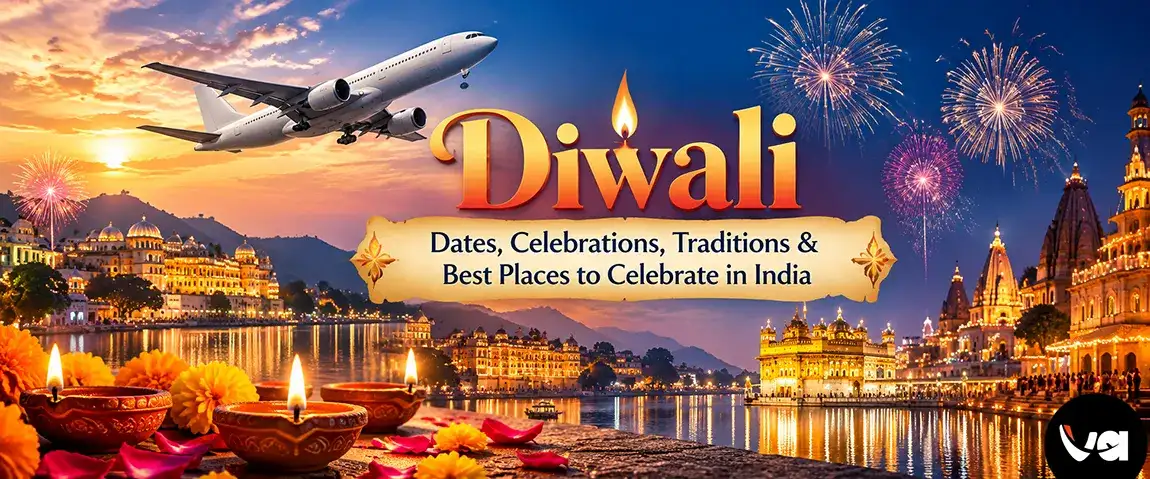
Diwali 2026: Explore Famous Festival Celebrations Across Indian Cities
Posted on Wednesday, October 14th, 2026 by Neha Sharma Leave a Comment
On Diwali, every home is illuminated by the flickering flames of diyas; markets are filled with shoppers and sweets are made in homes and shared with friends and family. Some go back to their hometowns while others perform Lakshmi puja at home or on the ghats of Varanasi. No matter how you celebrate Diwali, the essence remains the same.
Diwali 2026 date on 8th November, Sunday as per Drik Panchang, 2026 Lakshmi Puja Calendar, and Incredible India.
People also indulge in these celebrations on the other days of the festive period, such as Dhanteras and Naraka Chaturdashi.
How to travel for Diwali For families considering travel this Diwali, it’s also a time to visit relatives, discover another city’s Diwali celebrations or spend the long weekend at a new location. Learn everything you need to know about the date, celebrations in different parts of India, and destinations to travel to for Diwali.
When Is Diwali 2026?
Diwali, also called Deepavali, will be celebrated on Sunday, November 8, 2026. The main Lakshmi Puja takes place on Amavasya, the new-moon day of the Hindu lunar month of Kartik.
| Diwali 2026 Information | Details |
| Diwali date | Sunday, November 8, 2026 |
| Festival | Diwali or Deepavali |
| Lunar observance | Kartik Amavasya |
| Main religious observance | Lakshmi Puja |
| Common decorations | Diyas, rangoli, lamps and flowers |
| Main celebration | Family gatherings, prayers, festive meals and lights |
| Puja timing | Depends on the location and local panchang |
There are a lot of days of celebrations connected with Diwali. Dhanteras, Naraka Chaturdashi / Choti Diwali, the main Diwali date, the Govardhan Puja and the Bhai Dooj are all generally part of the festivities, though dates, names, and celebrations vary from place to place.
New Delhi, Lakshmi puja 2026 muhurat (timing): Per Drik Panchang, the muhurat for Lakshmi Puja in New Delhi on November 8 is from 5:54 PM to 7:50 PM. But the timing is various for different cities, so families should check the local panchang before finalising their puja.
What Is Diwali And Why Is It Celebrated?
Diwali, or Deepavali, is a major Hindu festival associated with the victory of good over evil, light over darkness and knowledge over ignorance. It is celebrated by Hindu communities across India and in many other countries, while Sikhs, Jains and some Buddhist communities also observe festivals or traditions connected with this time of year.
One of the best-known Hindu traditions links Diwali with the return of Lord Rama, Goddess Sita and Lakshmana to Ayodhya after their exile and Rama’s victory over Ravana. According to the Ramayana tradition, people welcomed their return by lighting lamps. This is why diyas remain such an important part of Diwali celebrations.
The festival also has a strong association with Goddess Lakshmi, who is worshipped for prosperity and good fortune, and Lord Ganesha, who is traditionally invoked for wisdom and the removal of obstacles. For many households, Diwali marks a fresh beginning, making it an important time for prayers, family visits, cleaning and new purchases.
The meaning of the festival is not limited to one story. Its religious significance varies across communities, which is reflected in the different ways people celebrate it.
Diwali 2026 Celebrations And Traditions
The days leading up to Diwali are often filled with preparations, shopping and family activities. Here are the main traditions readers can expect to encounter.
Cleaning and Decorating the Home
Houses are cleaned by families before Diwali for the same reason, that is, to bring luck into the new year. The house is decorated with rangoli and torans on the entrance and doors of the house.
Sand, flower petal or rice flour designs are painted at the entrance and courtyard of the houses. Some families keep their rangoli design simple, while others have a beautiful pattern for the big festival day.
Lighting Diyas and Decorating with Lights
Perhaps the most visible of the Diwali symbols are the earthen diyas. Families will arrange them outside their door, window, or balcony, in the courtyard or in front of religious shrines. Electric lights and lanterns are common as well in buildings, shops, and market streets.
Lamps are traditionally lit as a symbol of hope and victory of the light over darkness. A visitor to a city for Diwali may encounter streets and homes decorated with lamps and lights, given the setting.
Lakshmi Puja on Diwali Night
The day of Lakshmi Puja counts as one of the most important religious days of Diwali. People make a clean place to do puja, take a puja thali, offer flowers and sweets, and pray to Goddess Lakshmi and Lord Ganesha.
Shop owners and businessmen may also perform puja, mainly on the start of a new account book or the start of a new financial year in their family tradition. The right time and the way to perform puja depends on the family tradition and the panchang of the location.
For the 2026 festival, the New Delhi Lakshmi Puja muhurat from Drik Panchang is around 5:54 PM-7:50 PM. As the time differs for other places, those coming to visit should verify the muhurat instead of following the New Delhi timing only.
Sweets, Snacks and Family Gatherings
Diwali and Food Diwali is all about sharing making and sharing mithai boxes, dry fruits and homemade snacks, and then cooking up a feast for those who come to visit.
Regional menus vary North Indian families could have kaju katli laddoos namak pare and mixture. Western Indian families could have chakli, chivda, and regional sweets. Southern Indian families could have the sweets and savouries typical of the region made for the festival.
Shopping and food if you are planning to spend Diwali with your relatives and loved ones you can also enjoy shopping in local food markets and sweet shops. Do bear in mind that shopping areas and restaurants may have different opening hours on the main festival day.
Fireworks and Responsible Celebrations
Across the globe, fireworks are symbols of Diwali, though how and how many can vary from home to home. Some families opt for the glow of diyas, the sound of music and the company of others instead.
Make your celebration safe and legal. Watch for any firework restrictions at your location. Light fireworks away from the crowd animals vehicles and buildings and check local restrictions before purchasing or lighting them. Families and friends celebrating with lamps food music and good company can make this holiday special.
Diwali 2026: The Five Days of Celebration
Diwali is often described as a five-day festival, though the observances and their importance differ across regions.
| Festival Day | Common Observance | Traditional Significance |
| Dhanteras | Worship and purchases | Associated with prosperity and good fortune |
| Naraka Chaturdashi / Choti Diwali | Preparations and regional rituals | Linked in many traditions with the defeat of Narakasura |
| Diwali | Lakshmi Puja, diyas and family gatherings | Main festival of lights |
| Govardhan Puja / Annakut | Offerings and worship | Associated with Lord Krishna and Govardhan |
| Bhai Dooj | Visits and sibling rituals | Celebrates the bond between brothers and sisters |
The sequence is a useful overview, not a universal calendar for every community. In some parts of India, the wider festive period includes regional observances and a different emphasis on particular days.
How Diwali Is Celebrated In Different Parts Of India
Diwali is not celebrated in precisely the same way across the country. Local religious traditions, regional histories, food and family customs all shape the experience.
Diwali in Ayodhya, Uttar Pradesh
Ayodhya is closely linked to the Diwali celebrations of Lord Rama’s return from exile. As listed by Incredible India, the town falls under the Diwali-traditions and huge display of using diya.
People might also want to visit the city’s temples, religious sites, and enjoy the festive atmosphere. If you plan to visit Ayodhya, check official event announcements, access arrangements, and local transport information closer to the date. Public events can attract large crowds, and arrangements may change from year to year.
Popular Domestic Flight Routes to Ayodhya
- Chandigarh to Ayodhya Flights
- Jaipur to Ayodhya Flights
- Mumbai to Ayodhya Flights
- Ahmedabad to Ayodhya Flights
- Kolkata to Ayodhya Flights
Diwali in Varanasi, Uttar Pradesh
Varanasi offers a different setting, shaped by its temples, riverfront and evening rituals. The city is particularly associated with Dev Deepawali, which takes place around 15 days after Diwali on Kartik Purnima. The two festivals are related in the wider festive season but are separate occasions.
If you want to visit for Diwali itself, plan around the city’s local celebrations. If your main interest is the famous riverfront illumination associated with Dev Deepawali, check the separate festival date and arrangements before booking accommodation.
Diwali in Jaipur, Rajasthan
Jaipur is a practical option for travellers who want to combine Diwali with a city break. The Pink City is known for its historic architecture, traditional markets, handicrafts and Rajasthani food. Incredible India specifically highlights Jaipur’s markets and festive atmosphere during Diwali.
Visitors can explore the city’s bazaars, shop for gifts & enjoy local sweets before returning to their accommodation for the evening. Market opening hours and traffic restrictions may vary on the main festival day, so it helps to finish sightseeing earlier.
Travellers coming from Mumbai can compare Mumbai to Jaipur flights on Travanya when planning a festive break. The route page lists Mumbai’s BOM airport and Jaipur’s JAI airport.
Diwali in Amritsar, Punjab
In Amritsar, Diwali coincides with Bandi Chhor Divas, an important Sikh observance associated with the release of Guru Hargobind Sahib and other prisoners from Mughal detention. The day has its own religious significance, so it should not be treated simply as a regional version of Hindu Diwali.
The Golden Temple is a central place of worship, and the festival period is associated with prayers, devotional singing and illumination. Incredible India highlights Amritsar as a destination where Diwali and Bandi Chhor Divas bring a distinct festive experience.
Visitors should follow the rules of the religious complex, dress respectfully and check local arrangements if planning to visit during peak hours.
Popular Flights to Amritsar and Chandigarh
- Chandigarh to Amritsar Flights
- Delhi to Amritsar Flights
- Leh to Chandigarh Flights
- Indore to Chandigarh Flights
- Bangalore to Chandigarh Flights
- Hyderabad to Chandigarh Flights
Diwali in Delhi
Delhi’s Diwali celebrations combine home-based traditions with busy markets, decorated shopping areas and community gatherings. Families may visit relatives, prepare sweets, light diyas and perform Lakshmi Puja in the evening.
For travellers, the main consideration is planning around traffic, market crowds and any restrictions announced for public spaces or fireworks. Delhi is also a convenient base for visiting relatives across the National Capital Region, provided local transport is arranged in advance.
Diwali in Southern and Western India
In several southern Indian communities, Naraka Chaturdashi has particular importance, with morning rituals and celebrations linked to Lord Krishna’s victory over Narakasura. Other traditions may place different emphasis on the days before and after the main Diwali observance.
In Gujarat, Diwali is closely connected with business traditions and the Gujarati New Year, which is observed around this festive period. Families may perform Lakshmi Puja, exchange sweets and begin new account books according to local custom.
These regional differences make it worth learning about the traditions of your intended destination before planning a trip.
Major Flight Hubs in Southern India
Major Flight Hubs in Western India
Best Places To Celebrate Diwali 2026 In India
If you are considering a domestic trip for Diwali, choose a destination based on the experience you want: religious celebrations, historic surroundings, local shopping or time with family. These five places offer different ways to experience the festival.
1. Ayodhya, Uttar Pradesh
Ayodhya is the home of the Lord Rama and is an ideal stopover for religious tourists who wish to learn more about the spiritual meaning behind Diwali. Make sure to check about public celebrations and entry access and crowd control before making your trip.
2. Varanasi, Uttar Pradesh
Varanasi is a good place for visitors who want to see temples, the Ganges waterfront and enjoy evening prayer ceremonies. Take note that Dev Deepawali occurs on a different day in the month, so get the date if you want to be in town for that.
3. Jaipur, Rajasthan
There’s historic sights, shopping districts, handicrafts, and regional cuisine. For a family looking to take some sightseeing during Diwali in Jaipur, the city is a good choice but market opening hours and traffic might be affected.
4. Amritsar, Punjab
Amritsar offers an opportunity to understand Bandi Chhor Divas & its significance to Sikh communities. The Golden Temple is the city’s main spiritual landmark, and visitors should respect worshippers and follow the site’s visitor instructions.
5. Delhi, National Capital Territory
Delhi is a useful choice for people visiting relatives or combining festive shopping with a city stay. Plan shopping and sightseeing earlier in the day, leaving the evening free for family celebrations and Lakshmi Puja.
Diwali Travel Tips For 2026
What if I want to go on holiday for Diwali? Diwali will be on a Sunday in 2026, so you may be able to combine the major festival with a little holiday. It’s a busy time of year though, so book your trip in advance to avoid disappointment.
- Choose the place you want to celebrate: A family visit, a religious holiday and a sightseeing trip all have different itineraries.
- Double check your dates: The main Diwali day falls on 8 November 2026, but several regional celebrations fall on other days.
- Check out the domestic flight: Use our domestic flight booking page on Travanya to search for flights within India. Select the right departure time and get an idea of the total travel time for the journey.
- Give yourself extra time for airport trips: The heavy festival traffic can be a real drain on your travel times if it falls during your airport runs.
- Pre-Book accommodation: If you are visiting Ayodhya or Varanasi for the religious festivals, read how far is it from your accommodation to the place you will be visiting.
- Monitor event schedules: Major public festivals could have traffic restrictions or security measures, or might be difficult to access by local transport.
- Make a realistic schedule for your return journey: It is wise not to have such a short gap between the family celebrations and your scheduled departure from the airport.
- Be aware of local bylaws: Restrictions on fireworks, noise & access may vary city to city.
The flight information and prices shown on Travanya’s route pages are subject to change. Please ensure you double check the details for the dates you wish to book before confirming.
Conclusion
Diwali 2026 Date is on Friday, 8 November, 2026 Diwali is a family festival with lots of praying food lighting of diyas and new clothes. Different parts of India have different ways of celebrating it: Ayodhya in the story of Lord Rama, Varanasi with a dock on the river, Jaipur- markets, and Amritsar Bandi Chhor Divas.
For those wanting to celebrate somewhere else, Diwali might be a good opportunity to visit family members or travel to a different part of the country. When booking your Diwali travel, check all local flights on Travanya, check the event schedules and make sure you have ample time to get to them.
Explore More Indian Festivals and Celebrations
- Best Places to Celebrate Karwa Chauth in India
- Best Places to Celebrate Dussehra in India
- Sharad Navratri Celebrations in India
- Best Places to Celebrate Ganesh Chaturthi in India
- Best Christmas Destinations Around the World
- Onam Celebrations in Kerala
Frequently Asked Questions
- When is Diwali in 2026?
Diwali will be celebrated on Sunday, November 8, 2026. The date corresponds to Kartik Amavasya, and the main observance commonly includes Lakshmi Puja, lighting diyas and family gatherings.
- Why is Diwali celebrated?
Diwali is associated with the victory of good over evil and light over darkness. One well-known Hindu tradition connects the festival with Lord Rama’s return to Ayodhya after defeating Ravana. Other communities observe the period according to their own religious histories and traditions.
- What are the main Diwali rituals?
Common rituals include cleaning and decorating homes, making rangoli, lighting diyas, preparing sweets, performing Lakshmi Puja and visiting relatives. The exact practices vary by family and region.
- What is the significance of Lakshmi Puja?
Lakshmi Puja is performed to worship Goddess Lakshmi, who is traditionally associated with prosperity and good fortune. Many families also worship Lord Ganesha and pray for wisdom, well-being and positive beginnings.
- Which are the best places to celebrate Diwali in India?
Ayodhya, Varanasi, Jaipur, Amritsar and Delhi are useful destinations to consider, depending on your interests. Ayodhya is associated with the Rama tradition, Varanasi with its religious riverfront, Jaipur with festive markets, Amritsar with Bandi Chhor Divas, and Delhi with urban celebrations and family gatherings.
- Is Diwali celebrated in South India?
Yes. Diwali is observed in many parts of southern India, although the rituals and emphasis on particular festival days can differ from North Indian customs. Naraka Chaturdashi is particularly significant in several southern traditions.
- What is the difference between Diwali and Dev Deepawali?
Diwali is celebrated on Kartik Amavasya, while Dev Deepawali is observed on Kartik Purnima, around 15 days later. Varanasi is especially associated with Dev Deepawali, which is a separate event with its own riverfront celebrations.
- What is Bandi Chhor Divas?
Bandi Chhor Divas is an important Sikh observance associated with Guru Hargobind Sahib’s release from detention and the release of other prisoners. It coincides with Diwali and is particularly significant in Amritsar.
- Can I travel by domestic flight during Diwali?
Yes, you can plan domestic air travel during the Diwali period. Compare available flight options, check baggage rules and flight status, and allow extra time for airport transfers. If you intend to attend a specific public celebration, confirm its schedule and access arrangements before travelling.
- What should I check before booking a Diwali trip?
Confirm your destination, dates, accommodation and local event schedule. Check the local Lakshmi Puja timing if you plan to participate, and leave enough time for airport transfers. Avoid relying on a single city’s puja muhurat when celebrating elsewhere.

About Neha Sharma View All Posts
Neha Sharma, a passionate travel blogger, captures the beauty of the world through her words. With her adventurous spirit and a keen eye for detail, Neha takes her readers on mesmerizing journeys to exotic destinations. Her vivid descriptions and insightful tips make her the go-to guide for wanderlust seekers. Join Neha as she explores the globe, sharing her love for travel and inspiring others to go on their unforgettable adventures.
Latest Blog
-
10 Different Ways Of Celebrating Dussehra Across Indian States
Oct 1st, 2026 -
Sharad Navratri 2026 Dates, Significance, Celebrations And Travel
Sep 24th, 2026 -
Ganesh Chaturthi 2026: Best Places to Celebrate in India
Sep 17th, 2026 -
25 Best Destinations to Celebrate Christmas Around the World
Oct 14th, 2026 -
Air India Launches Easy Connect Flights From Ahmedabad To 26 Global Destinations
Sep 4th, 2026 -
20 Famous Places to Visit in Kerala in 2026 for a Memorable Holiday
Aug 31st, 2026