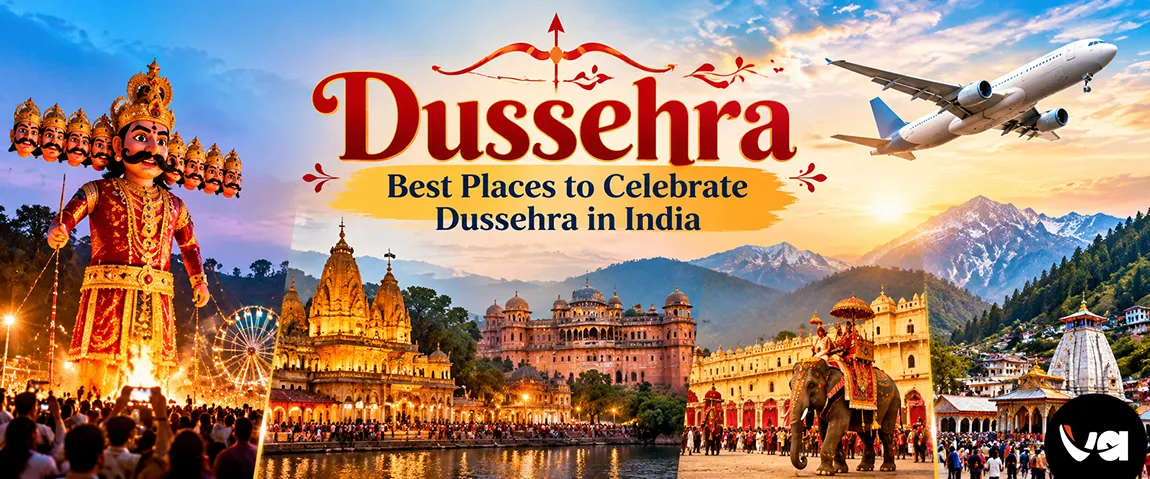
10 Different Ways Of Celebrating Dussehra Across Indian States
Posted on Wednesday, September 30th, 2026 by Neha Sharma Leave a Comment
Dussehra falls on Tuesday, October 20, 2026, but people across India observe the festival in many different ways. In some places, the day is associated with Ramlila and the burning of Ravana effigies. Elsewhere, the focus is on Goddess Durga, local deities, royal processions, temple rituals or long-running community festivals. Mysuru turns Dasara into a grand city-wide celebration, and Kullu brings together village deities, while Bastar follows traditions that are quite different from the usual Ram-Ravana narrative.
For travellers, this makes Dussehra an interesting time to plan a domestic trip. A festival journey can mean flying to a major city and continuing by road or rail, or taking a direct domestic flight when the destination is well connected. Here are 10 places where Dussehra takes a distinctly regional form, along with practical flight options to consider.
Why Is Dussehra Celebrated?
According to Hindu tradition, Dussehra or Vijayadashami represents the victory of good over evil. In the Ramayana tradition, Lord Rama’s victory over Ravana is commemorated. In Bengal and parts of eastern India, Vijayadashami marks the conclusion of Durga Puja and is connected with Goddess Durga’s victory over Mahishasura.
These traditions have developed differently across regions. The festival may involve a Ravan Dahan ceremony in one city, a procession of village deities in another, or temple rituals dedicated to Goddess Durga elsewhere. Incredible India also identifies Mysuru Dasara, Kullu Dussehra, Kolkata’s Vijaya Dashami, and Bastar Dussehra as distinct regional expressions of the festival
10 Different Ways Dussehra Is Celebrated Across India
1. Karnataka: Mysuru Dasara
Mysuru Dasara is one of Karnataka’s most prominent Dussehra celebrations and has a strong connection with the worship of Goddess Chamundeshwari. According to local tradition, the festival commemorates her victory over Mahishasura. The 2026 Mysuru Dasara is scheduled from October 11 to October 21, making it longer than the single-day Vijayadashami observance.
Mysuru Palace becomes one of the main visual features during the festival, with large-scale illumination after sunset. The famous Jamboo Savari procession brings decorated elephants, horses and cultural tableaux through the city. Music and dance performances, the Dasara Exhibition, food events and other programmes are held during the 10-day celebration. A torchlight parade marks its closing festivities.
Karnataka Flight Routes
- Delhi to Bangalore Flights
- Cochin To Bangalore Flights
- Coimbatore To Bangalore Flights
- Dehradun To Bangalore Flights
- Goa To Bangalore Flights
- Guwahati to Bangalore Flights
- Hyderabad To Bangalore Flight
2. Himachal Pradesh: Kullu Dussehra
Kullu Dussehra follows a different rhythm from the single-day Ravan Dahan format commonly associated with Dussehra in many northern cities. The celebration takes place in the Kullu Valley and centers around the traditional gathering of local deities.
The festival is held at Dhalpur Maidan, where deities from surrounding villages are brought in processions on decorated palanquins. Lord Raghunath has an important place in the celebration, while traditional music, Nati dance, local food, handicrafts, and community gatherings form part of the festivities. The celebration begins around Vijay Dashmi and continues into the following days. Incredible India lists October 15, 2026 for Kullu Dussehra.
Flights to Himachal Pradesh
- Delhi To Shimla Flights
- Chandigarh To Shimla Flights
- Bangalore To Shimla Flights
- Chennai to Shimla Flights
- Pune To Shimla Flights
- Hyderabad to Shimla Flights
3. West Bengal: Kolkata Vijaya Dashami
In Kolkata, Vijayadashami comes at the end of the Durga Puja period rather than following the conventional North Indian Ravan Dahan format. The central figure is Goddess Durga, and the final day is associated with her victory over Mahishasura.
The closing rituals include the farewell of Durga idols and their immersion. Traditional practices such as Sindoor Khela are observed in many communities, while Kolkata’s neighbourhood puja pandals, cultural programmes and festive gatherings remain part of the larger Durga Puja experience. Incredible India describes Vijaya Dashami as the conclusion of Kolkata’s Durga Puja festivities.
Flights to West Bengal
- Chandigarh To Kolkata Flights
- Delhi To Kolkata Flights
- Amritsar To Kolkata Flights
- Bangalore To Kolkata Flights
- Jammu To Kolkata Flights
- Mumbai To Kolkata Flights
- Varanasi To Kolkata Flights
- Ahmedabad To Kolkata Flights
4. Chhattisgarh: Bastar Dussehra
Bastar Dussehra is one of the clearest examples of why Dussehra cannot be described through a single national format. Held in Jagdalpur, the celebration is rooted in the religious and tribal traditions of Bastar and is associated with Maa Danteshwari and local deities.
The festival lasts for a much longer period than the usual Dussehra observance. The 2026 celebration began with Pat Jatra on August 12, while the main Dussehra phase is scheduled for October 18-22, with October 20 listed as the main date. Crucially, Ravana’s effigy is not burned during Bastar Dussehra. The festival instead follows its own rituals, deity traditions, chariot ceremonies and community practices.
Flights to Chhattisgarh
- Ahmedabad To Raipur Flights
- Chennai To Raipur Flights
- Kolkata To Raipur Flights
- Lucknow To Raipur Flights
- Bangalore To Raipur Flights
- Hyderabad To Raipur Flights
5. Rajasthan: Kota Dussehra
Kota’s Dussehra is closely associated with the Kota Dussehra Mela, which extends well beyond Vijayadashami itself. The 2026 fair is scheduled from October 20 to November 6, giving travellers a longer window to visit Kota.
Ravan Dahan remains a major part of the celebration, with large effigies of Ravana, Kumbhakarna and Meghnad forming a central attraction. The wider fair includes cultural performances, folk music and dance, public programmes, food stalls, shopping and other activities. Its history is connected with Kota’s royal past and the wider Hadoti region.
Flights to Rajasthan Routes
- Chandigarh To Jaipur Flights
- Delhi To Jaipur Flights
- Dehradun To Jaipur Flights
- Jammu To Jaipur Flights
- Mumbai To Jaipur Flights
- Chandigarh To Udaipur Flights
- Delhi To Udaipur Flights
- Mumbai To Udaipur Flights
- Ahmedabad To Udaipur Flights
- Jaipur To Udaipur Flights
- Nagpur to Udaipur Flights
6. Uttar Pradesh: Ayodhya and Ramlila Traditions
Uttar Pradesh has several important Ramayana-linked traditions during Dussehra. Ayodhya, associated in Hindu tradition with Lord Rama, is a natural destination for travellers interested in the religious side of Vijayadashami. Ramlila performances and festive gatherings form an important part of the broader celebration.
Ramlila traditions are also prominent in Ramnagar and Varanasi, where performances based on the Ramayana are staged over several days. Incredible India specifically identifies Ayodhya, Ramnagar and Varanasi among places associated with Ramlila traditions.
Flights Uttar Pradesh Routes
- Mumbai To Agra Flights
- Hyderabad to Agra Flights
- Bangalore To Agra Flights
- Mumbai to Varanasi Flights
- Pune to Varanasi Flights
- Ahmedabad to Varanasi Flights
- Bangalore to Varanasi Flights
- Delhi To Lucknow Flights
- Amritsar To Lucknow Flights
- Bangalore To Lucknow Flights
- Ahmedabad To Kanpur Flights
- Ahmedabad To Ayodhya Flights
- Bangalore To Ayodhya Flights
7. Gujarat: Ahmedabad and Vijayadashami After Navratri
In Gujarat, the festive period leading to Vijayadashami is strongly associated with Navratri, Garba & Dandiya. The nine nights preceding Vijayadashami have a major cultural presence across the state, with Ahmedabad hosting large organized events as well as community celebrations.
This makes Gujarat different from places that primarily identify Dussehra with Ravan Dahan. Here, the wider Navratri-to-Vijayadashami period often shapes the travel experience, with devotional activities, music, dance & community gatherings forming part of the season. Incredible India lists Ahmedabad’s Navratri celebrations among the major festival events for 2026.
Flights to Gujarat Routes
- Delhi To Ahmedabad Flights
- Dehradun to Ahmedabad Flights
- Kochi To Ahmedabad Flights
- Bangalore To Ahmedabad Flights
- Chandigarh To Surat Flights
- Delhi to Surat Flights
- Jaipur To Surat Flights
- Pune To Vadodara Flights
- Surat To Rajkot Flights
8. Andhra Pradesh: Vijayawada Dussehra
In Vijayawada, Dussehra is celebrated in the Kanaka Durga Temple situated on the Indrakeeladri Hill. The festival is mainly linked to the Goddess Durga and the Vijayadashami climax of Navratri.
During the festival, the goddess is depicted in various ways through different fantastic ornaments and pujas, ceremonies, and religious meetings that happen at the temple. The 2026 Dussehra Festival in NTR District will last from 11-10-2026 to 20-10-2026. It ends the Vijayadashami festival.
Andhra Pradesh Flight Routes
- Delhi To Tirupati Flights
- Ahmedabad to Tirupati flights
- Hyderabad To Tirupati Flights
- Bangalore To Tirupati Flights
- Hyderabad to Vijayawada Flights
9. Maharashtra: Dussehra and Vijayadashami Traditions
Maharashtra observes Vijayadashami through several family and community traditions rather than one uniform statewide format. Apta leaves, traditionally exchanged as a symbolic form of “sona” in many communities, are associated with the festival. Temple visits, family gatherings and Shastra Puja or Ayudha Puja may also form part of the day, depending on local and family customs.
Ravan Dahan events are held in some places, but they should not be treated as the only way Dussehra is observed across Maharashtra. The festival can look quite different between cities and communities.
Maharashtra flight Routes
- Cheap Delhi To Mumbai Flights
- Ahmedabad To Mumbai Flights
- Amritsar To Mumbai Flights
- Pune To Mumbai Flights
- Delhi To Pune Flight
- Chandigarh To Pune Flights
- Amritsar To Pune Flights
- Ahmedabad To Pune Flights
10. Tamil Nadu: Vijayadashami, Golu and Ayudha Puja Traditions
In Tamil Nadu, the Dussehra period connects closely with Navratri traditions, Golu or Bommai Kolu, Saraswati Puja, Ayudha Puja and Vijayadashami. Homes may display arrangements of dolls during Golu, while tools, instruments, books and other objects may be included in Ayudha Puja observances.
Vijayadashami also has associations with learning and beginning educational activities in some traditions. The result is a festival period with a distinctly South Indian character rather than a celebration centered primarily on Ravana effigies.
Dussehra 2026: 10 Destinations and Flight Planning
| State | Dussehra Destination | Main Celebration | Flight Route to Consider |
| Karnataka | Mysuru | Mysuru Dasara | Delhi → Bengaluru + onward travel |
| Himachal Pradesh | Kullu | Kullu Dussehra | Delhi → Chandigarh + onward travel |
| West Bengal | Kolkata | Vijaya Dashami | Delhi → Kolkata |
| Chhattisgarh | Jagdalpur | Bastar Dussehra | Delhi → Raipur + onward travel |
| Rajasthan | Kota | Kota Dussehra Mela | Delhi → Jaipur + onward travel |
| Uttar Pradesh | Ayodhya | Ramlila / Vijayadashami | Delhi → Varanasi or Lucknow + onward travel |
| Gujarat | Ahmedabad | Navratri / Vijayadashami traditions | Delhi → Ahmedabad |
| Andhra Pradesh | Vijayawada | Kanaka Durga celebrations | Delhi → Vijayawada |
| Maharashtra | Mumbai | Vijayadashami traditions | Delhi → Mumbai |
| Tamil Nadu | Chennai | Golu / Ayudha Puja / Vijayadashami | Delhi → Chennai |
The flight routes above are planning options based on current Travanya route evidence, where available. Flight schedules and availability can change, so travellers should check their exact travel dates before booking.
How To Plan A Dussehra Trip Within India
Start with the celebration itself rather than the flight. Mysuru, Kullu, Kolkata and Bastar all have different festival calendars, so checking the local schedule should come first.
A few practical points can make the journey easier:
- Check the festival dates and program before finalizing travel dates.
- Compare direct and connecting flight options for the destination.
- Consider nearby airports if the festival town has limited air connectivity.
- Leave enough time for airport-to-city or airport-to-festival transfers.
- Check baggage allowances before booking.
- Review cancellation and flight-change conditions.
- Recheck the flight status before leaving for the airport.
- Allow additional time for traffic around major processions and festival venues.
- Reserve accommodation early in cities expecting large festive crowds.
- Keep some flexibility in the itinerary if the festival program changes.
Booking Domestic Flights For Dussehra Travel
Dussehra travel can involve very different flight plans depending on the destination. For a city such as Kolkata, Mumbai or Chennai, travellers can look for flights directly to the destination airport. For places such as Mysuru, Kota, Kullu or Jagdalpur, the practical itinerary may involve flying to a nearby major airport and completing the journey by road or rail.
Travanya’s domestic flight booking platform allows travellers to compare available options based on departure city, destination, and travel dates. Before booking, check the flight timing, connection duration, baggage rules & airport details rather than looking at the ticket price alone.
For festival travel, also check the return journey at the same time. A popular event can make both outbound and return flights busier than usual.
Dussehra Travel Tips For Families
Families travelling during Dussehra may need a little more planning because festival areas can become crowded.
- Keep children comfortable during longer journeys and road transfers.
- Carry suitable clothing for temple visits and outdoor events.
- Check local transport availability before arriving.
- Avoid scheduling airport arrival immediately after a major procession.
- Keep digital copies of tickets and important travel documents.
- Check the weather forecast before packing.
- Confirm venue or temple entry requirements where applicable.
- Keep some extra time between the festival program and your return flight.
- Carry essential medicines and personal items in cabin baggage where appropriate.
- Confirm the return flight status before leaving the hotel.
Why Dussehra Is A Great Time To Explore India’s Regional Traditions
If the common reference to Dussehra is ‘the victory of good over evil,’ local religious practices and the region’s history have led to two very different observances.
Mysore is very royal, and Tripuram follows one of the sacred Chamundeshwari traditions. In Kullu, village deities are glorified in a Himalayan situation. Kolkata celebrates Vijayadashami at the end of the Durga Puja, whereas Bastar has its own tribal and religious traditions without Ravan effigies. Kota has a mixture of the long running Ravan Dahan fair as well and Ayodhya’s festival is closely connected to Ramayana traditions.
This variation can happen beneficially for those planning to travel for Thanksgiving. Rather than searching for a single typical Dussehra holiday, you can select a location based on the type of holiday you want.
Conclusion
The Dasara 2010 date is October 20 for Dussehra (north and western India), with timelines, other calendars, rituals, and traditions varied. The North Indian town of Mysuru may be celebrating Dasara processions, whereas the Kullu valley would be welcoming a multitude of local deities. Kolkata will be concluding Durga Puja, Bastar will be celebrating a unique tribal tradition, and Kota will be hosting a long-running festival fair.
The appropriate destination for travellers ultimately will depend on the intended celebration and available travel time. Domestic flight travel may reduce travel time for journeys of considerable distance, and nearby-airport options may make destinations with limited air connectivity more manageable. Travanya could be used to explore available domestic flight options before settling on the final schedule.
FAQs
Q.When is Dussehra in 2026?
A: Dussehra or Vijayadashami falls on Tuesday, October 20, 2026. However, several regional celebrations begin earlier or continue after this date. Mysuru Dasara, for example, is scheduled from October 11 to October 21, while the Kota Dussehra Fair runs from October 20 to November 6.
Q.How is Dussehra celebrated differently across India?
A: Dussehra can involve Ramlila and Ravan Dahan in some regions, while other areas focus on Goddess Durga, local deities, temple rituals, royal processions or community fairs. Bastar Dussehra is particularly different because it does not centre on burning a Ravana effigy.
Q.Which states are famous for Dussehra celebrations?
A: Karnataka, Himachal Pradesh, West Bengal, Chhattisgarh, Rajasthan and Uttar Pradesh are among the states with well-known regional Dussehra traditions. Gujarat, Andhra Pradesh, Maharashtra and Tamil Nadu also have important Vijayadashami or Navratri-related observances.
Q.Where can I experience Mysuru Dasara?
A: Mysuru Dasara takes place in Mysuru, Karnataka. Major attractions include the illuminated Mysuru Palace, the Jamboo Savari procession, cultural programmes and the Dasara Exhibition. The 2026 celebration is scheduled for October 11-21.
Q.What is special about Kullu Dussehra?
A: Kullu Dussehra is known for the gathering and processions of local deities in Kullu Valley. Events are centred around Dhalpur Maidan, with Lord Raghunath holding an important place in the traditions. The celebration begins around Vijayadashami and continues beyond the day itself.
Q.Why is Bastar Dussehra different from other Dussehra celebrations?
A: Bastar Dussehra is rooted in the religious, tribal and local deity traditions of Bastar. It does not centre on the Ram-Ravana story or the burning of a Ravana effigy. Maa Danteshwari and the region’s distinctive rituals form the heart of the celebration.
Q.How is Dussehra celebrated in Kolkata?
A: Kolkata observes Vijayadashami as the concluding day of Durga Puja. The day is associated with Goddess Durga, traditional farewell rituals and immersion of Durga idols, following several days of puja and cultural activity.
Q.What is famous about Kota Dussehra?
A: Kota is known for its Dussehra Mela, which in 2026 is scheduled from October 20 to November 6. Ravan Dahan is a major event, while the larger fair includes cultural programmes, folk performances, food, shopping and other activities.
Q.Which Indian cities can I visit for a Dussehra trip?
A: Mysuru, Kullu, Kolkata, Jagdalpur, Kota, Ayodhya, Ahmedabad, Vijayawada, Mumbai and Chennai are 10 destinations where travellers can experience different regional forms of Dussehra or Vijayadashami. The festival format varies considerably between them.
Q.Can I book domestic flights for Dussehra travel?
A: Yes. Travellers can compare domestic flight options based on their departure city and destination. For places with limited or indirect air connectivity, check nearby airports and allow time for the onward road or rail journey. Travanya currently lists domestic routes such as Delhi–Bengaluru, Delhi–Kolkata, Delhi-Mumbai and Delhi-Chennai.

About Neha Sharma View All Posts
Neha Sharma, a passionate travel blogger, captures the beauty of the world through her words. With her adventurous spirit and a keen eye for detail, Neha takes her readers on mesmerizing journeys to exotic destinations. Her vivid descriptions and insightful tips make her the go-to guide for wanderlust seekers. Join Neha as she explores the globe, sharing her love for travel and inspiring others to go on their unforgettable adventures.
Latest Blog
-
Sharad Navratri 2026 Dates, Significance, Celebrations And Travel
Sep 24th, 2026 -
Ganesh Chaturthi 2026: Best Places to Celebrate in India
Sep 17th, 2026 -
25 Best Destinations to Celebrate Christmas Around the World
Sep 14th, 2026 -
Air India Launches Easy Connect Flights From Ahmedabad To 26 Global Destinations
Sep 4th, 2026 -
20 Famous Places to Visit in Kerala in 2026 for a Memorable Holiday
Aug 31st, 2026 -
Onam in Kerala 2026: 10-Day Celebrations, Traditions, Food & Events
Aug 27th, 2026



Leave a Comment