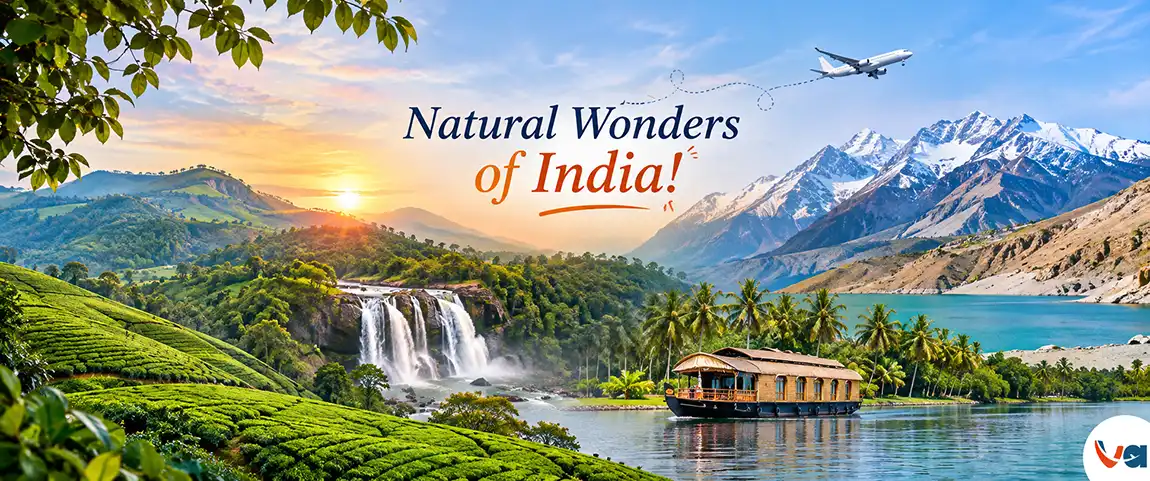
Explore the 12 most amazing natural wonders of India!
Posted on Friday, November 13th, 2026 by Kamal Kishor Leave a Comment
Imagine yourself standing in a valley with flowers blooming, looking at a waterfall falling down a green cliff, or a lake shifting its shades of blue under the mountain sky. All these landscapes and many more are in India. Its natural wonders, from the Himalayas to the Indian Ocean, provide experiences far beyond a normal holiday.
The natural beauty of India extends beyond the mountains and beaches. There are flower valleys, old forests, high-altitude lakes, salt deserts and colourful marine ecosystems in the country. Some are well-known places to visit, and others are less touristy getaways for the adventurous who like to visit outside the tourist track.
For those looking for scenic places in India, these destinations will give you a closer look at the country’s extraordinary landscapes and biodiversity.
What Makes India’s Natural Heritage So Special?
India is blessed with an amazing diversity of natural environments. The Himalayas host glaciers, alpine meadows and high-altitude lakes, while the Western Ghats and northeastern hills are home to dense forests, rivers and waterfalls. Coastal ecosystems, mangroves and coral reefs, further south and east, provide habitats for a variety of fauna.
There are a number of these areas in India designated as ‘biodiversity hotspots’, which are home to unique biodiversity, including plant and animal species found nowhere else. There are also several landscapes which are recognised as UNESCO World Heritage sites, such as the Western Ghats, Sundarbans, Valley of Flowers, etc.
12 Natural Wonders of India You Must Explore
From famous natural attractions in India to quieter corners that deserve more attention, these destinations offer very different experiences. Here are some of the best places to visit in India for nature lovers.
1. Kashmir Valley, Jammu and Kashmir
Kashmir is known for its beautiful valleys, snow-covered peaks, rivers, and peaceful lakes. Dal Lake, Pahalgam, Gulmarg and Sonamarg each offer a different view of the region’s Himalayan landscapes. In spring and summer, there are lots of flowers and lovely weather, and you can also visit the green meadows and the mountain environment.
Explore these stunning locations in one trip! Book our Kashmir tour package today!
2. Valley of Flowers, Uttarakhand
Picture yourself walking through a valley of colourful wildflowers with mountains all around you and streams flowing. This is what one encounters in the Valley of Flowers in Uttarakhand. It is a national park in the Himalayas that is known for its alpine vegetation and endangered wildlife. The valley is particularly colourful during its main flowering period, which lasts from July to September.
It is one of the most amazing flower valleys in India and is also a memorable place for trekking and wildlife lovers alike.
3. Pangong Lake, Ladakh
Pangong Lake is famous for its blue water and rugged mountain surroundings. Its colour changes with the light, so it looks different every day. It is one of the most spectacular high-altitude lakes in India. The water stands out even more in the dry mountain environment around it.
Travelling with your partner? Check out our Leh-Ladakh tours and book flights now!
4. Western Ghats, Maharashtra to Kerala
The Western Ghats are a chain of hills, rivers, waterfalls, and remarkable biodiversity, which runs along the western side of India. It is one of the nation’s significant biodiversity hotspots with diversity of plant, bird, amphibian and mammal life.
The region is also full of some beautiful waterfalls in India, including the Monsoon and After. It has tropical rainforests that make it an essential place to visit for nature and wildlife enthusiasts.
5. Munnar, Kerala
Munnar’s rolling tea plantations, misty hills and winding roads make it one of the most scenic places in India. The cooler climate and green surroundings offer a refreshing break from busy city life. Visitors can explore tea gardens, viewpoints and nearby Eravikulam National Park, known for its high-altitude grasslands and Nilgiri tahr.
Try our Kerala tour packages for a longer getaway to the hills and backwaters.
6. Sundarbans, West Bengal
The Sundarbans are unlike the mountain and valley destinations on this list. This huge mangrove ecosystem is made up of rivers, tidal channels and dense forests. Wild animals like the Royal Bengal tiger are also inhabitants here. Boat trips can be taken to explore the waterways, but visitors need to respect local forest and wildlife regulations.
The Sundarbans are a prize possession of India’s natural heritage and demonstrate the importance of the coastal environment for wildlife and for people.
7. Loktak Lake, Manipur
Loktak Lake is famous for its phumdis, floating islands. These masses of vegetation, soil and organic matter create an unusual landscape across the water. The lake also hosts the world’s only floating national park, Keibul Lamjao National Park, home to the endangered Sangai deer.
It is one of the more unusual and offbeat nature destinations in India, especially for travellers interested in wetlands and wildlife.
8. Dzukou Valley, Nagaland and Manipur
Dzukou Valley is famous for its rolling green hills, open grasslands, seasonal flowers and streams. It lies on the border of Nagaland and Manipur and provides a more peaceful mountain experience than some of the more touristy parts of India.
The valley is particularly green in the monsoon, and the seasonal Dzukou lily enhances the beauty. This hike is strenuous and should be undertaken at one’s own risk and with the right gear.
9. Andaman Islands
Clear waters, coral reefs, tropical forests and quiet beaches make the Andaman Islands a wonderful coastal escape. Radhanagar Beach on Swaraj Dweep is especially popular for its scenic shoreline. The surrounding Andaman coral reefs support diverse marine life and offer opportunities for snorkelling and diving.
Visitors should choose responsible operators and avoid touching or standing on coral. If you are considering an island holiday, explore nature tour packages for nature-focused travel options.
Check flights to Port Blair.
10. Rann of Kutch, Gujarat
The Great Rann of Kutch is a vast seasonal salt marsh that transforms into an expansive white landscape during the dry season. Its open horizons look especially striking under moonlight and during sunrise or sunset. The Rann of Kutch offers an entirely different experience from India’s green valleys and forest regions.
The winter Rann Utsav also brings local crafts, music and cultural experiences to the region.
11. Kaziranga National Park, Assam
Kaziranga is renowned for the greater one-horned rhino. It is home to elephants, wild buffalo, deer and many other bird species in its grasslands, wetlands and forest patches. A guided safari offers the chance to explore the park within season and park regulations.
For wildlife enthusiasts, Kaziranga offers a chance to experience the natural richness of northeastern India.
12. Kaas Plateau, Maharashtra
Often called the Valley of Flowers of Maharashtra, the Kaas Plateau is colourful during the post-monsoon flowering season. Its grasslands support many seasonal wildflowers, including species found only in the Western Ghats. The flowers are delicate, so visitors should stay on marked paths and avoid picking them.
It is one of the most captivating seasonal natural attractions in the region, particularly for people who enjoy photography and botanical landscapes.
Check flights to Pune.
When Is the Best Time to Explore India’s Natural Wonders?
There is no single ideal month for every destination. The right season depends on the landscape you want to experience and the activities you have planned.
| Season | Destinations worth considering |
| October to March | Andaman Islands, Sundarbans, Munnar, Rann of Kutch and Kashmir |
| April to June | Ladakh, higher Himalayan destinations and some hill regions |
| July to September | Valley of Flowers, Kaas Plateau, Dzukou Valley and the Western Ghats |
Always check local weather, road conditions, park opening dates and trekking permissions before travelling. Monsoons can make some mountain routes and trails difficult, while high-altitude destinations may have restricted access in winter.
How to Plan a Nature-Focused Trip Around India?
Start by choosing the kind of landscape you want to experience. A Himalayan holiday needs a different itinerary from a wildlife safari or a beach trip. Also consider travel time, local transport and the number of days available.
Explore Travanya’s tour packages and check the latest deals and offers while comparing your travel options.
Book your Domestic flight now!
FAQs
1. What are the most famous natural wonders of India?
A: Some of India’s most famous natural attractions include the Himalayan mountain ranges, Valley of Flowers, Pangong Lake, Western Ghats, Sundarbans, Andaman Islands and Rann of Kutch. Each offers a different natural experience, from mountain scenery and wildlife to beaches and unique ecosystems.
2. Where can I find beautiful waterfalls in India?
A: Meghalaya is particularly famous for its waterfalls, including Nohkalikai Falls and Seven Sisters Falls. Other notable options include Dudhsagar Falls in Goa and Jog Falls in Karnataka. The monsoon and post-monsoon months are generally good for seeing them at their fullest.
3. Which are some offbeat nature destinations in India?
A: Dzukou Valley, Loktak Lake, Ziro Valley, Tirthan Valley and parts of the Western Ghats offer quieter experiences than many popular tourist destinations. These places are worth considering if you enjoy scenic landscapes, local culture and outdoor activities away from busy tourist centres.
4. Where can I experience high-altitude lakes in India?
A: Ladakh is one of the best regions for high-altitude lakes, with Pangong Lake and Tso Moriri among its best-known examples. Gurudongmar Lake in Sikkim is another remarkable destination.
5. Which regions in India are known for tropical rainforests?
A: The Western Ghats and northeastern India have important tropical and subtropical forest ecosystems. Parts of Kerala, Karnataka, Meghalaya and Arunachal Pradesh are known for dense greenery, rich biodiversity and diverse wildlife.

About Kamal Kishor View All Posts
Kamal is a passionate travel writer who brings destinations to life through his words. With years of experience and a knack for delivering impactful content, he blends creativity with insight in his writing. Growing up in Himachal, he developed a deep love for mountains, treks, and peaceful escapes. With a curious mind and an explorer’s spirit, Kamal aims to inspire readers to discover new places and create unforgettable travel experiences.
Latest Blog
-
Top Trekking Places Near Pune for Adventure Junkies
Nov 18th, 2026 -
Best Places to Visit in India This November 2026
Nov 13th, 2026 -
10 Different Ways Of Celebrating Dussehra Across Indian States
Oct 1st, 2026 -
Sharad Navratri 2026 Dates, Significance, Celebrations And Travel
Sep 24th, 2026 -
Ganesh Chaturthi 2026: Best Places to Celebrate in India
Sep 17th, 2026 -
25 Best Destinations to Celebrate Christmas Around the World
Oct 14th, 2026



Leave a Comment